
To support the ‘Bennel Wood – Woodland Laboratory’ project, we’ll be posting a series of blogs as we learn more about natural regeneration and the influence different treatments have on what grows on (and lives in!) a recently felled commercial site.
The fourth blog is by Emma Chinnery from Babbity Environmental, leading on the collection of baseline data on the site…
Despite appearances, Bennel woods is not as homogeneous of an environment as it seems, containing a range of microhabitats which support many different species of wildlife.
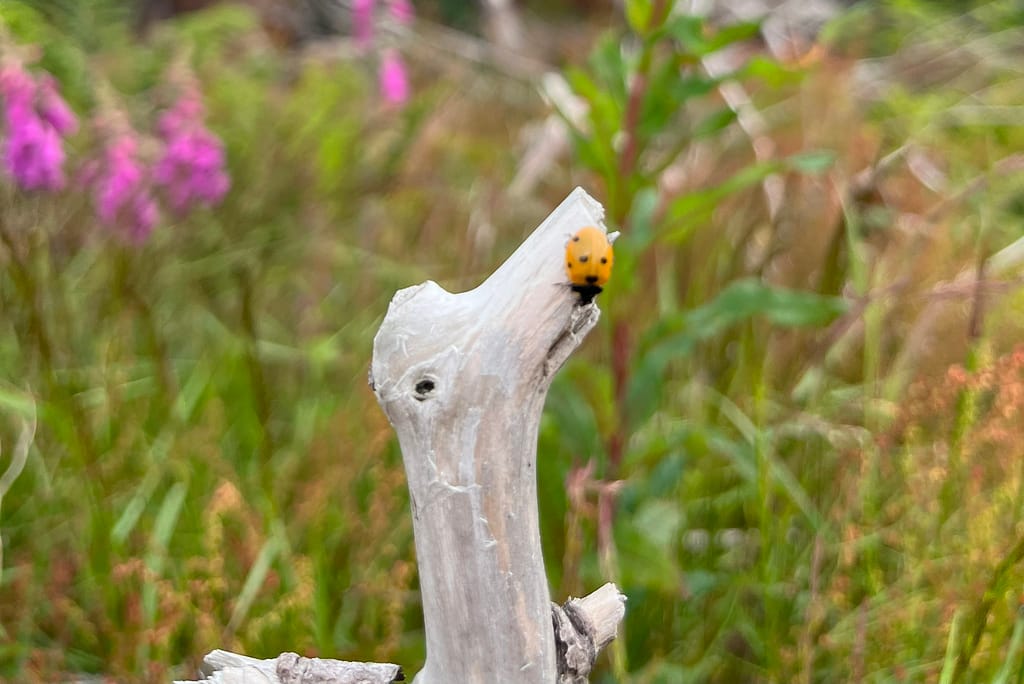
One of the most diverse groups of wildlife supported by Bennel woods is bugs – moths, butterflies, ladybirds, beetles and bees all call the woodland home. The variation in topography, plants and sward structure provide places for invertebrates to live. The felling of the former woodland has left large amounts of deadwood which provide food and shelter for beetles and insects such as woodlice and millipedes, whilst the live trees scattered throughout the site provide further food and shelter – a single oak tree can support over 280 invertebrate species.
The regenerating landscape has given rise to a combination of scrub and grassland environments, supporting many other invertebrates. At Bennel, crickets chirp loudly across the site whilst bumble bees buzz between foxgloves. Butterflies and dragonflies have also begun to visit the site, with many nettles covered in peacock butterfly caterpillars.
Another insect at Bennel in abundance are midges, as myself and anyone else who has done an evening survey at the woodland can attest. However, these provide a great food source for the bats which use the woodland as a hunting ground. A single Soprano pipistrelle can eat up to 3,000 insects in one night, with the majority of their hunting taking place in the hours after sunset and before sunrise. Initial surveys have found a large amount of soprano pipistrelle activity at Bennel woods, and as the woodland develops and new habitats are created more bat species are sure to visit too.
Another insect which has become a favourite food source of the badgers at Bennel woods are bumblebee nests. There is a badger sett at the woodland, with foraging signs across the site, including recently two dug up bumblebee nests. Badgers sniff the underground nests out, digging them up to eat the larvae inside. However, bumble nests only form a small part of a badgers diet, they will also forage for other insects and arthropods such as earthworms, slugs and snails. Another firm favourite of badgers is elderberries, with their setts often found under elder trees for easy access to a quick snack.
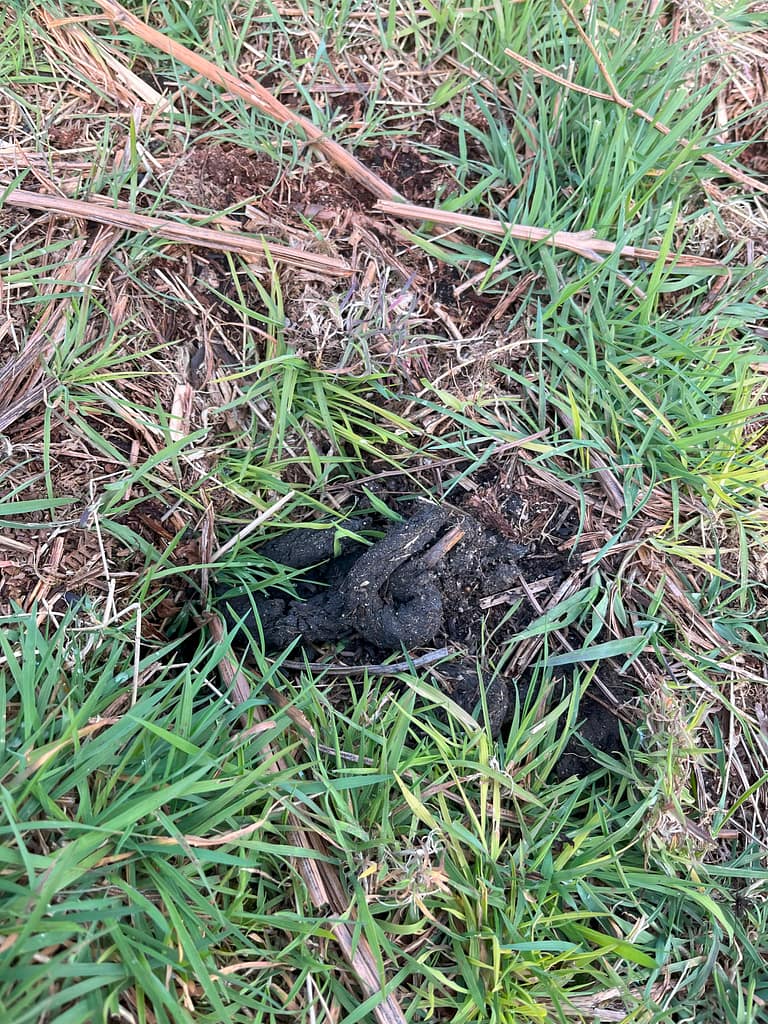
The recent diet of badgers can be inferred from their scat which is deposited in small depressions in the ground called latrines. These are often found near setts and along territory boundaries, with a number of latrines scattered across the site at Bennel wood. Close inspection of these can show shiny snail shells, cherry pits and may even be tinged purple if elderberries have come into season recently … These latrines are also distinctive in their slightly chemical smell which is often likened to TCP antiseptic, although smelling them is optional.
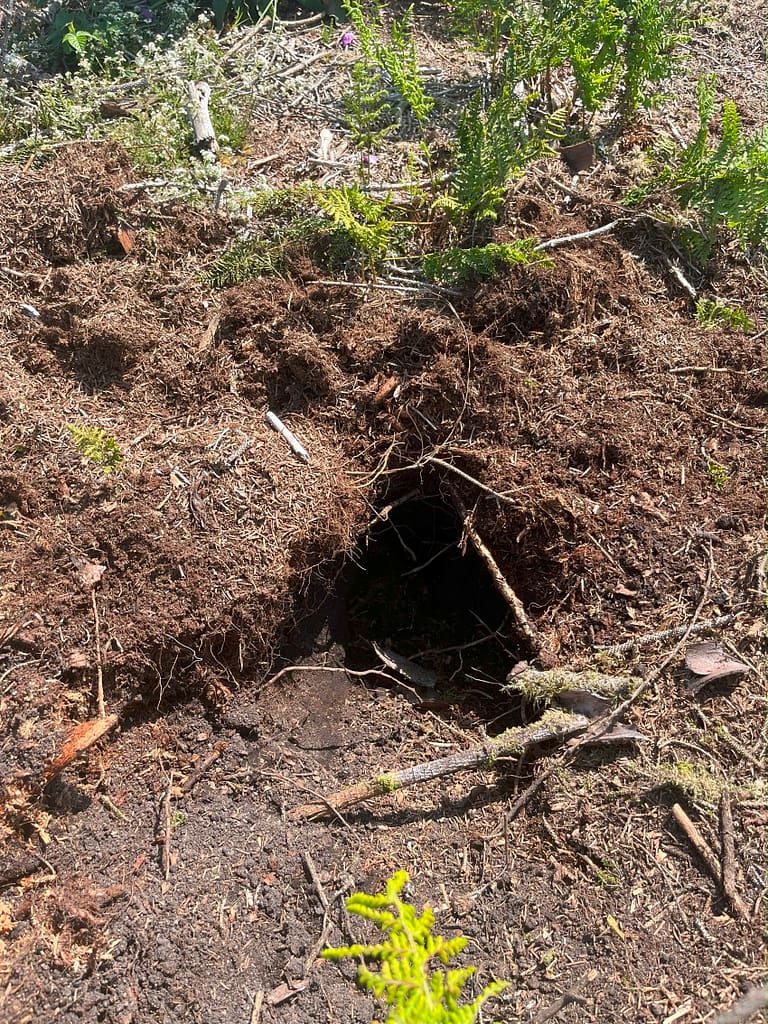
Overall, Bennel woods is an exciting project which is sure to attract more species as it continues to develop and evolve. I look forward to working on it further and seeing what we find!
Emma Chinnery June 2025
(Note: Watch this space for completion of baseline data and reports being published)