
To support the ‘Bennel Wood – Woodland Laboratory’ project, we’ll be posting a series of blogs as we learn more about natural regeneration and the influence different treatments have on what grows on (and lives in!) a recently felled commercial site.
The ninth blog is by DGW’s Phil Dowling, looking back at a recent visit during inclement weather…
Bennel can often be a welcoming place, vibrant and full of life, drive down the track and you’re away from it all, a little-known paradise just down the road from the tip, however sometimes you get the feeling you’re just not welcome, you’ve turned up at the wedding also wearing a white dress and the wind howls in your face and the rain comes in sideways somehow managing to rain on the inside of your glasses. Today is such a day and as I arrive I sit in my dry, warm car, pretty much all it’s good for, and peer outside at the trees as they wave at me, showing me how big their knuckles are. I sit and I sit, and then eventually work up a mouse-sized amount of courage before scurrying across to the holly green shipping container. Once a container carrying tea, rocking around the world via ship bound for our thirsty teacups, this has now been converted into a small store and workspace, with grand plans for solar panel installation to power heaters, lighting and if I get my way, a massage chair. But right now, the heater isn’t connected yet so warm clothes and a flask of hot tea will have to suffice.
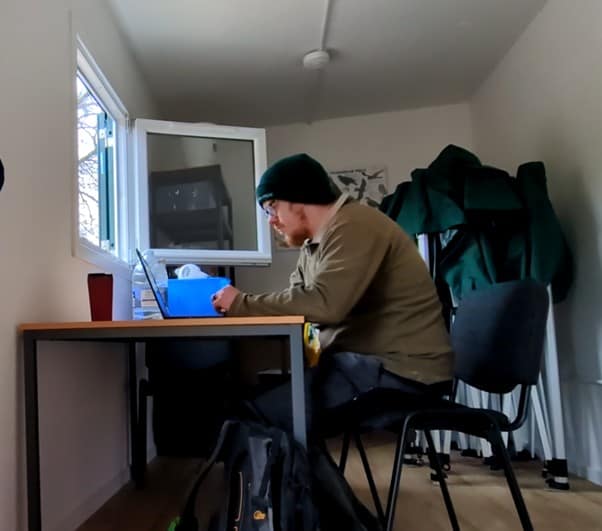
I settle in, windows open, laptop out, raining drumming on the roof and begin answering the morning’s emails. The weather eases a little so I swiftly move some things to and fro between my car and the other end of the container, the equipment store, wading through tea leaves (in my mind), before sitting back down again to remind myself about some of the lichens I plan to look for today, or is it just procrastination to avoid the rain. I pull myself together, determined, I down my tea, refreshed, I don my waterproof armour, ready to defy the weather whilst wearing intimidating shades of periwinkle blue.
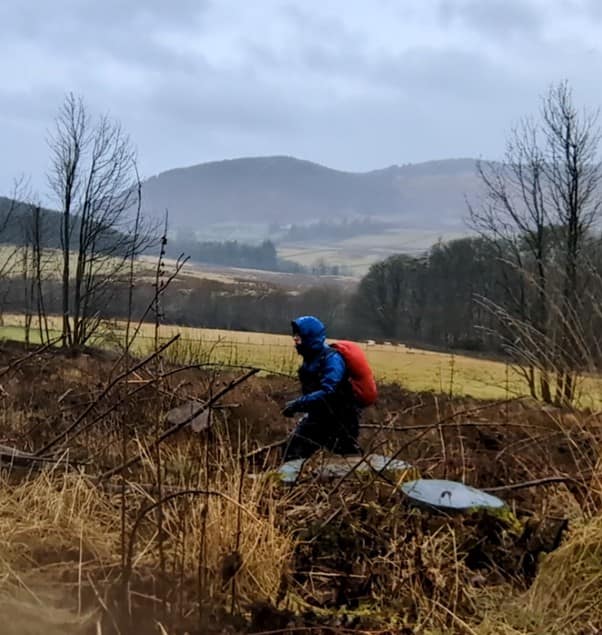
I set off to hunt for elusive lichens whilst traversing along a route weaving between three wildlife cameras hidden across the site. My waterproofs are breached before I’ve gone 50m from the container, sodden I look back longingly through the fine rain, the container drifting out of view in billows of mist like some long-lost lover on a steam train. Brows furrowed, head bowed I soldier on.
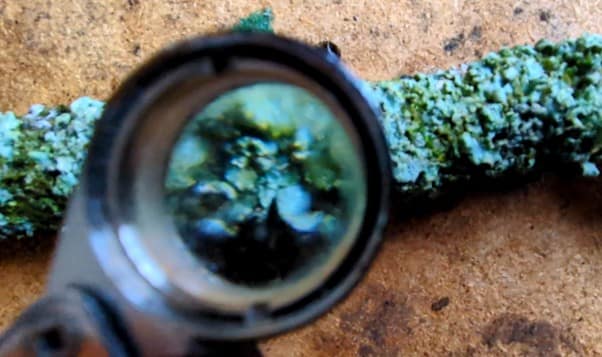
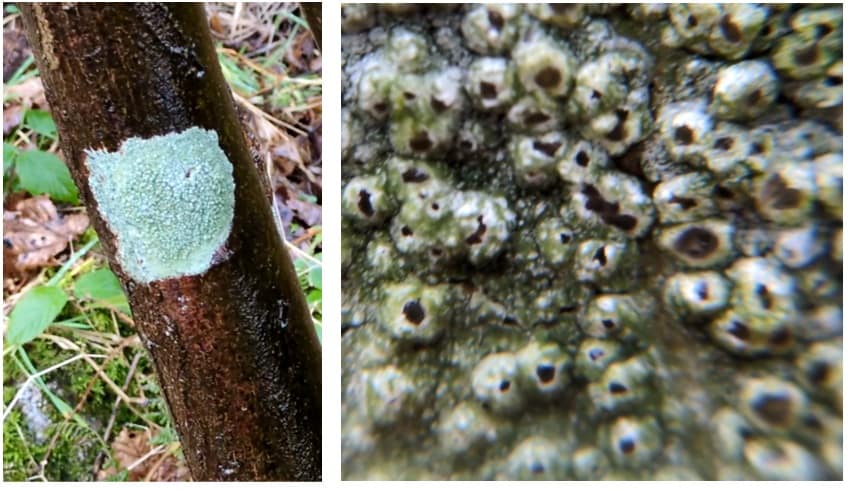
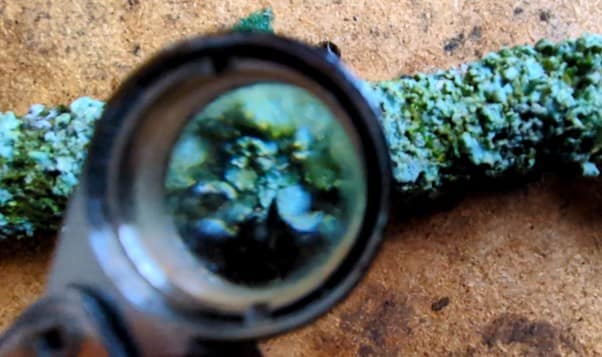
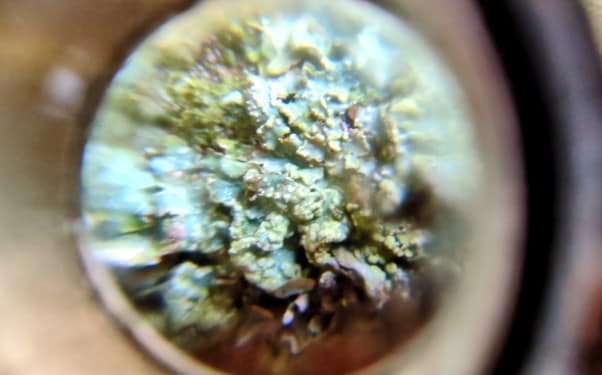
Looking for lichens is slow work, even harder when you’re still learning what to look for, great for slowing down and focusing, probably a very good mindfulness practice, there’s money to be had out of that somehow…but on a warm summers day for sure. I find it hard to get my eye in, even though lichens don’t move I’m so used to just seeing them as part of a tree’s bark, I have to actively focus on differentiating them from the tree itself. I hone in on some bogey green crusty stuff on a Sycamore, whip out my x10 magnification hand lens, unfortunately no one is nearby to gasp, and zone in on the bogey lichen. What appears is a whole other world in miniature, features like burst open volcanoes and crevices appear, I imagine a tiny bug family would need to flee the area during an eruption.
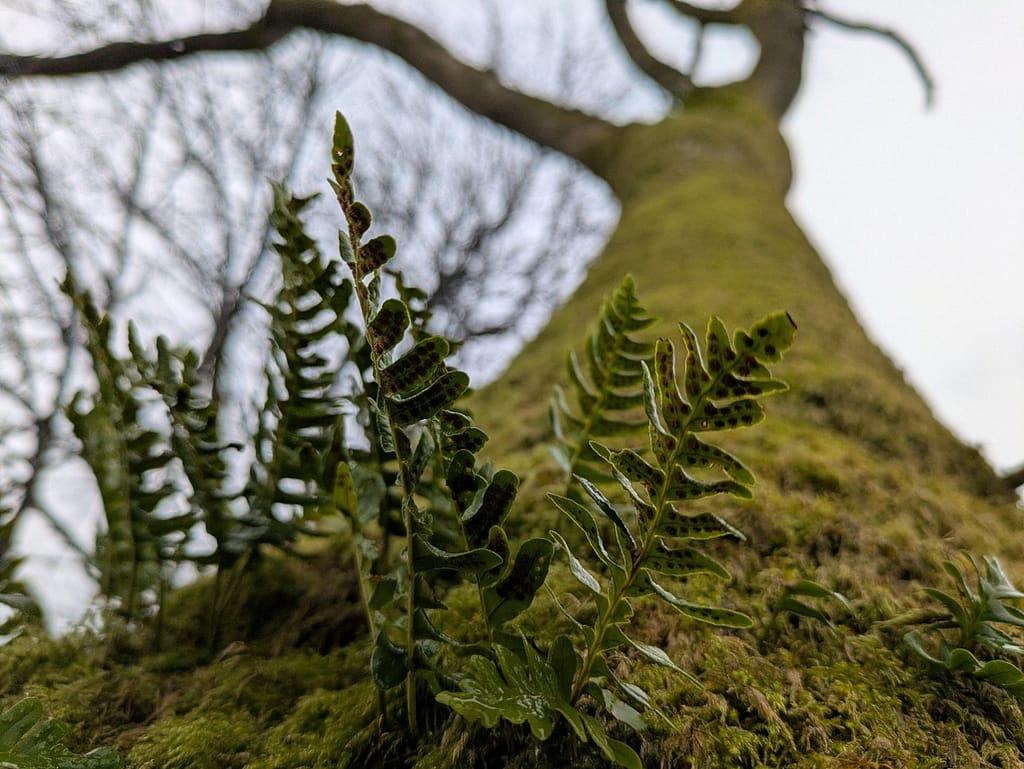
Momentarily fascinated I continue looking around the trees here that cling on to this northern boundary, some of the last remaining mature trees that remain on site, to find polypody ferns growing up the north western side of an Ash tree, were this a regular sight here it may indicate that this had potential to be temperate rainforest however here just in this one patch it indicates that this particular area of the site is located within a cool, damp, wet climate. My soggy socks also indicate this.
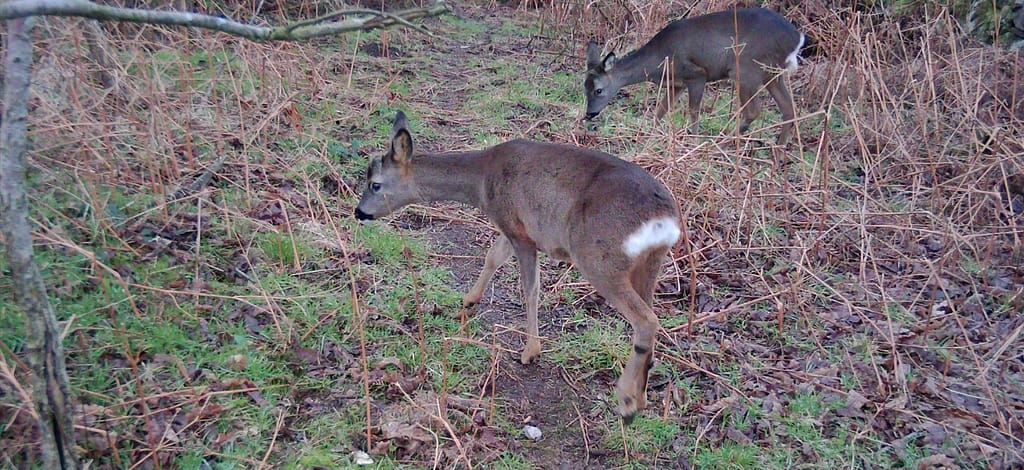
Gradually lichen hunting becomes less appealing as I trundle and splatter through bouncing brown puddles towards the first of the three trail cams. We set these up primarily to capture images of herbivores on the site such as deer and hare but they’re also giving us an insight into other mammals that are also present here such as badger, fox, humans and their dogs, and oh yes, the occasional tabby cat. We’re still deciding what woodland treatments will be incorporated into the woodland laboratory, and these cameras may well play a part in relating animal behaviours to said treatments.
With all cameras now checked I half-heartedly glance at trees for lichens now as I make my way down the last of the slope and back on the track towards base, I scramble over a fallen Rowan tree which is covered from branch tip to roots in lichen, I’ve hit the motherload! I wrench a limb free and decide to look it over back in the container rather than standing here shivering my conkers off in the rain.
Stumbling back into frame, I finally reach salvation back at the holly green shipping container, greeted by a warm crackling fire (that shouldn’t be there), and a tepid cup of tea. Changing the sodden and limp not-so waterproof layers for dry clothes, followed by sipping on a fresh warm coffee gives me that “ahhhh bisto” moment before I check out what has been caught on the cameras in the last few weeks on the laptop, followed by looking over the Rowan branch.
One thing I’ve learnt about Bennel, which came to me during my final ascent clambering up and over the top most ridge, then shuffling numb-toed across the unforgiving wind-torn plateau towards the 3rd and final wildlife camera, is that if it’s bad weather at the bottom of the hill, then it’s going to be a hell of a lot worse at the top, there is no shelter – casually rock up in a t-shirt and pumps at basecamp and you’re in for a world of hurt at the summit. That being said, it’s a cracking double-sea view, up and down in about 10 mins, along well-made paths, bring the children…however it’s very much up to you how adventurous and dramatic an experience you’d like to have whilst visiting.
Phil Dowling, March 2026