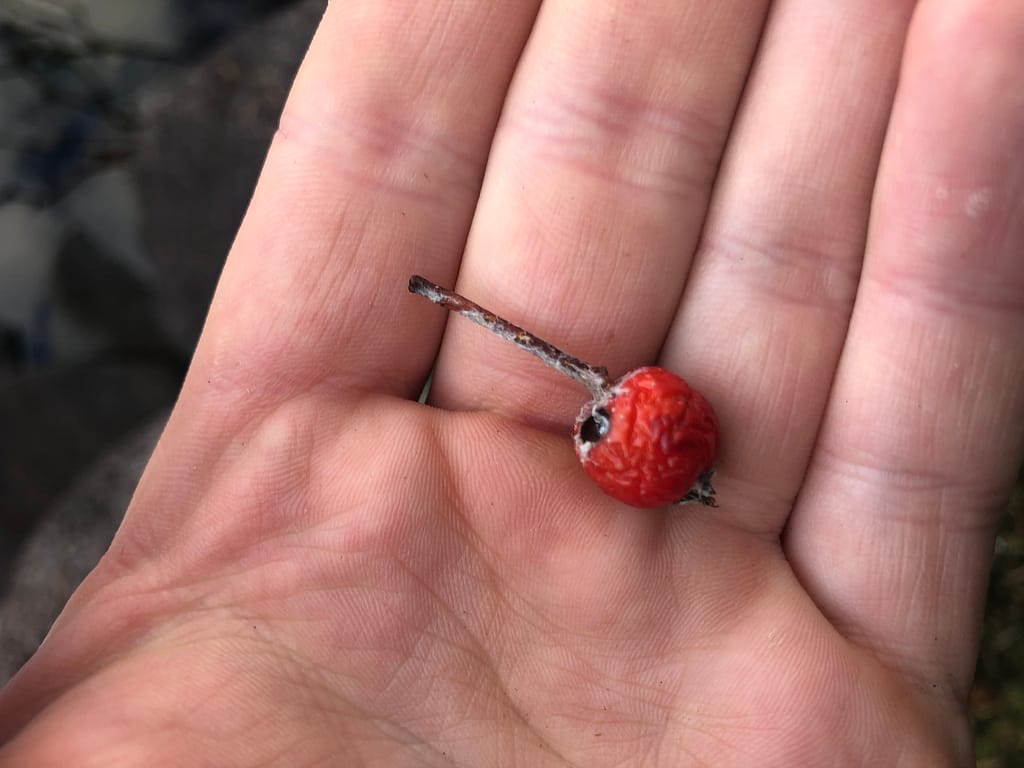
Rock Whitebeam (Sorbus rupicola) is the most widespread native whitebeam in the UK, but these populations are very scattered and the species is categorised as Nationally Scarce. Sorbus rupicola’s requirement for open but ungrazed habitats, means it is largely recorded on coastal cliffs or gorges/ledges inland, making it one of the few truly specialist coastal woodland species.
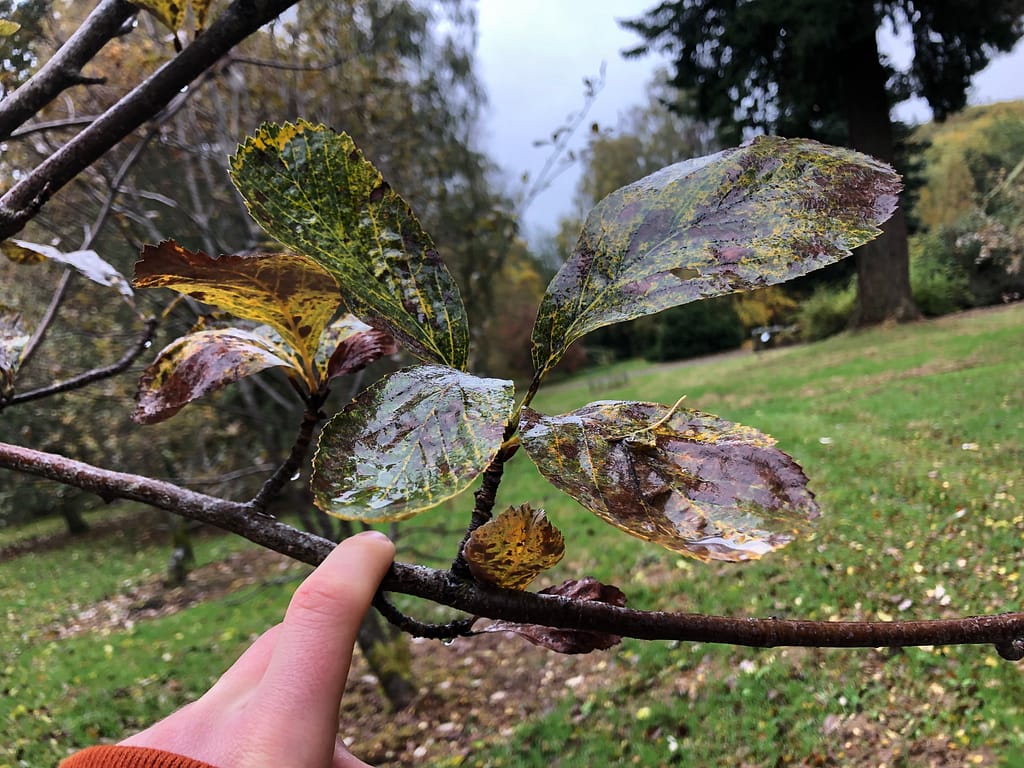
Work is getting underway to find Rock Whitebeam in Dumfries & Galloway, with a focus on our coastal woodland sites. This project is led by Dumfries & Galloway Woodlands, with the support of Catkin Ecology (https://catkinecology.co.uk/), and forms part of the development work of the Solway Coast and Marine Landscape Connections Project.
Despite the apparently precarious plight of Rock Whitebeam, to date very little ecological restoration and woodland creation work has involved this species. Dumfries & Galloway is the only part of Western Scotland with no ‘records’ of Rock Whitebeam. This search hopes to give us a better understanding of its role in coastal woodlands in Dumfries & Galloway.
There are over 50 species of whitebeam in the UK, but only a few occur in Dumfries and Galloway. At first glance, the better-known Common Whitebeam (Sorbus aria), native to Southeast England, looks similar. Both species have unlobed, dark green or mid-green leaves on top and a felt-like, white or whitish-felted underside, with white flowers and red fruits. The main difference is the leaf shape: Common Whitebeam has oval leaves with a regularly serrated edge, while Rock Whitebeam generally has more elongated, leaves that are sharply toothed in the upper half, but smooth towards the base. Another useful tip is the number of main leaf veins (Rock Whitebeam has less than 20 in total) and the shape of the fruit (wider than long in Rock Whitebeam).
The search is being overseen by Dumfries & Galloway Woodlands, a new charity set up to support trees, habitats and the people that depend upon them in the region.
Phil Dowling from Dumfries & Galloway Woodlands, said, as the search got underway:
“D&G has such an extensive coastline that it’s almost absurd to think that there isn’t Rock whitebeam somewhere in the region. I’m hugely excited as we enter into this new chapter, with intrepid explorers searching for such an elusive rarity. Will we ever find it? If so, where will it be, how has it managed to survive against the odds, and what can we do to help it…so many questions!”
If you think you have seen a Rock Whitebeam or have historic records that might help the search, please get in touch with Phil.Dowling@dgwoodlands.org, ideally with a photo and location of the suspected sighting.
This work forms part of the development phase of SCAMP Landscape Connections, a ten year, nationally significant project focusing on the coastline of the Solway Firth. For more information, see https://www.solwaycoastmarine.co.uk/. Nick Chisholm, SCAMP Landscape Connections Programme Co-Ordinator, said:
“How brilliant! The Solway Coast and Marine Project is all about innovation and knowledge, the whitebeams are a curious group of trees that cling onto life in the most surprising of places. Our rocky headlands and wild cliffs may be super important for this species. We need, of course, to know where they are before we can help them. It is great that Dumfries and Galloway Woodlands is taking a lead on increasing our understanding of their status in the region.”
For more information about Dumfries & Galloway Woodlands, follow them on social media, visit the website www.dgwoodlands.org.uk or sign up for the newsletter here: http://eepurl.com/iAlL6k. Dumfries & Galloway Woodlands is registered in Scotland as a SCIO, number 052525.
Dumfries & Galloway Woodlands is a membership organisation. If you’d like to join as a member, visit the website. For any further info, please contact mcnabb.laurie@dgwoodlands.org.